

SME import seafood from Vietnam is often described as a sourcing exercise – find a supplier, agree on price and place an order.
In practice, SME import seafood from Vietnam in 2025 has become a multi-layer operational process shaped by tighter border controls introduced under the EU official control framework set out in Regulation (EU) 2017/625, alongside expanded traceability and catch certification requirements enforced through the EU IUU Regulation and its 2026 CATCH system updates. In reality, product quality matters, but it is rarely the primary reason first-time imports fail.
This guide is written from the perspective of VanPhat Imex, based on hands-on experience supporting SME importers and buyers across Europe, the Middle East, North Africa, ASEAN and Central America who want to understand the full picture behind seafood imports and why small and mid-sized buyers cannot simply replicate the playbook used by large frozen seafood importers.
Key takeaways
- Treat your first shipment as a designed operating system, not a one-off transaction (specs, QC, cold chain, documents, cash flow).
- Choose destination market first; compliance and border controls differ by region and even by species/product form.
- Start with a controlled pilot shipment and tight specifications before scaling volume or SKU count.
- Build a repeatable documentation pack (labels, certificates, packing list, invoice, traceability) and run pre-shipment checks.
- Model cash-flow and delay scenarios upfront; port holds and demurrage can erase margins faster than price changes.
SME Import Seafood from Vietnam: A System, Not a Transaction
Large buyers approach seafood imports as a repeatable industrial operation. SMEs must approach them as a designed system.
A single shipment of black tiger shrimp, pangasius fillet (basa fillet) or yellow fin tuna touches multiple control points:
- Destination-market regulations
- Supplier traceability and documentation
- Shipment structure (LCL vs FCL)
- Cold-chain continuity
- Inspection and clearance risk
- Cash-flow exposure during delays
Ignoring any one of these does not usually result in a warning. It results in holds, relabeling costs, rejected entry or margin erosion.
Start With the Right Lens: Market First, Product Second
One of the most common SME mistakes when importing seafood from Vietnam is reading generic import rules without anchoring them to a specific destination market.
Why market selection matters
Each region applies seafood controls differently:
- European Union: strong emphasis on traceability and IUU prevention
- United Kingdom: separate post-Brexit border systems and pre-notification requirements
- ASEAN (e.g. Singapore): licensing and permit-based imports by shipment
- Middle East & North Africa: certificate-driven clearance, often health-certificate focused
- Central America: growing structure around veterinary and sanitary permits
As a result, an SME importing pangasius from Vietnam into the EU faces a different process than one importing vannamei shrimp into the UAE, even if the factory and product are identical.
Product lane determines compliance depth
Within the same market, different species are subject to different levels of regulatory scrutiny, particularly for first-time or irregular importers.
Species-level compliance differences
Different seafood categories trigger different compliance expectations at the border.
- Shrimp: black tiger shrimp, vannamei shrimp

- Whitefish: pangasius, pangasius fillet, basa fish, basa fillet, pangasius fish fillet, tilapia fish, barramundi fish

- Tuna: yellow fin tuna, yellow tail tuna, tuna loin

- Others: mackerel, moonfish
Each category carries distinct expectations on labeling, permitted additives, moisture control, glazing limits and traceability, reflecting Codex Alimentarius guidance for fish and fishery products issued jointly by FAO and WHO.
High-risk species for first-time SME importers
Recent inspection patterns show that authorities apply closer scrutiny to certain species when SMEs import seafood for the first time.
In Europe, inspectors increasingly review pangasius fillet shipments for moisture content, additive declarations, and labeling consistency, especially when the importer lacks an established compliance history.
In Middle Eastern markets, authorities frequently cross-check documentation for vannamei shrimp shipments, comparing health certificates, packing lists, and commercial invoices. Even small inconsistencies can delay clearance.
Authorities also pay close attention to basa fish and basa fillets, which are alternative trade names for pangasius. They examine moisture levels and additive use closely. Although regulators permit sodium tripolyphosphate (STPP), excessive use can cause fillets to retain excess water and distort declared net weight. For this reason, shipping documents and labels must clearly state STPP percentages, glaze levels, and net weight so that declared figures match actual yield. Because basa is marketed under multiple trade names such as basa, tra, and swai, incorrect species naming or incomplete traceability often triggers additional inspections under Codex-aligned controls.
For tuna loin, particularly in foodservice programs, import authorities increasingly focus on product naming accuracy and lot-level traceability, reflecting Codex Alimentarius standards on species identification and traceability for fishery products issued by FAO and WHO.
SMEs that treat seafood as a single, uniform category often encounter avoidable friction at the border. In 2025, regulators apply compliance expectations at the species and product-form level rather than across broad seafood categories.
Why SMEs Cannot Copy the Big-Buyer Model
This distinction is critical for SMEs attempting to import seafood from Vietnam without the scale and buffers of large buyers.
What factory-standard sourcing assumes
Most export-oriented seafood factories are designed to serve volume buyers. Their operating systems are built around a set of assumptions that work well at scale.

Factory-standard sourcing typically assumes that the buyer:
- Already understands destination-market compliance requirements
- Has internal resources to manage documentation and corrections
- Can absorb inspection delays as a routine operating cost
- Ships full containers on fixed production and logistics cycles
For large frozen seafood importers, this operating model is both efficient and scalable. By contrast, for SMEs, the underlying assumptions rarely reflect their operational constraints.
The practical gap SMEs face at the border
In practice, across several EU and Middle East ports, inspections for first-time or irregular importers can extend clearance timelines by 3 to 7 working days, compared to 24 to 72 hours for established importers with consistent compliance histories under the EU Regulation 2017/625 on official controls.
Consequently, for SMEs shipping frozen products, these delays are not marginal. Each additional day at port can translate into thousands of dollars in cold storage, demurrage and handling fees, quickly eroding already narrow margins.
Large buyers absorb these costs as part of scale operations. SMEs cannot.
The real SME constraint
SMEs typically operate with:
- Limited compliance and documentation capacity
- Tighter cash-flow windows
- Higher sensitivity to cold-chain disruption
- Greater exposure to labeling and document inconsistencies
When SMEs try to copy factory-standard sourcing by focusing first on price and production volume, they often discover too late that the model itself was not built for them.
Factory capability is rarely the problem. The real question is whether the model fits the buyer’s operating context.
Imports Are Built, Not Quoted
For SMEs planning to import seafood from Vietnam, the first shipment should be treated as a controlled pilot, not a scale operation. This is where many seafood business ideas succeed or fail.
A realistic seafood business plan must account for:
- True landed cost (not just FOB or CIF price)
- Inspection and clearance time
- Storage and demurrage exposure
- Documentation revision risk
SMEs who underestimate these factors often find that a profitable quotation turns unprofitable after arrival. For many first-time buyers, SME import seafood from Vietnam fails not because of price, but because the import process itself is under-designed.
Vetting a Seafood Supplier as an Import Partner
Choosing a seafood supplier in Vietnam is not about selecting a factory, it is about selecting an import-capable partner.
What SMEs should verify early
A reliable frozen seafood supplier should be able to demonstrate:
- Consistent specs for products like pangasius fillet (basa fillet) or tuna loin
- Familiarity with destination-market documentation
- Clear SOPs for freezing, packing, and container loading
- Experience handling SME volumes, not only full-container buyers
If a supplier cannot explain how a shipment clears customs in your target market, the operational risk shifts entirely to the buyer.
Species-specific considerations
- Pangasius/ Basa fish: moisture control and additive disclosure are frequent audit points
- Shrimp: size grading, treatment declarations and residue history matter
- Tuna: market naming and labeling consistency are common failure points
- Mackerel and moonfish: often overlooked, but prone to mislabeling issues
This level of vetting is essential for SME buyers working with a seafood trading company or sourcing independently.
Paperwork Designed for Clearance, Not Just Compliance
Most failed imports are not missing documents. They are misaligned documents.
In 2025, authorities across multiple importing regions are placing greater emphasis on document consistency rather than document presence. Importers are increasingly evaluated not on whether documents exist, but on whether product descriptions, quantities, processing details, origin statements and labeling information align precisely across all submissions.
Core documents remain standard:
- Commercial invoice

- Packing list

- Transport document
- Certificate of origin

However, SMEs must also align:
- Product description wording
- HS classification logic
- Label content
- Shipment quantities
In markets such as the EU and UK, traceability documents for wild-caught species introduce an additional layer of scrutiny, as authorities apply official control procedures under Regulation (EU) 2017/625 and enforce EU IUU Regulation catch certificate requirements, which will become fully digital under the EU CATCH system from 2026.
Therefore, documentation must be designed before production, not corrected after shipment.
LCL Shipment: A Practical SME Advantage
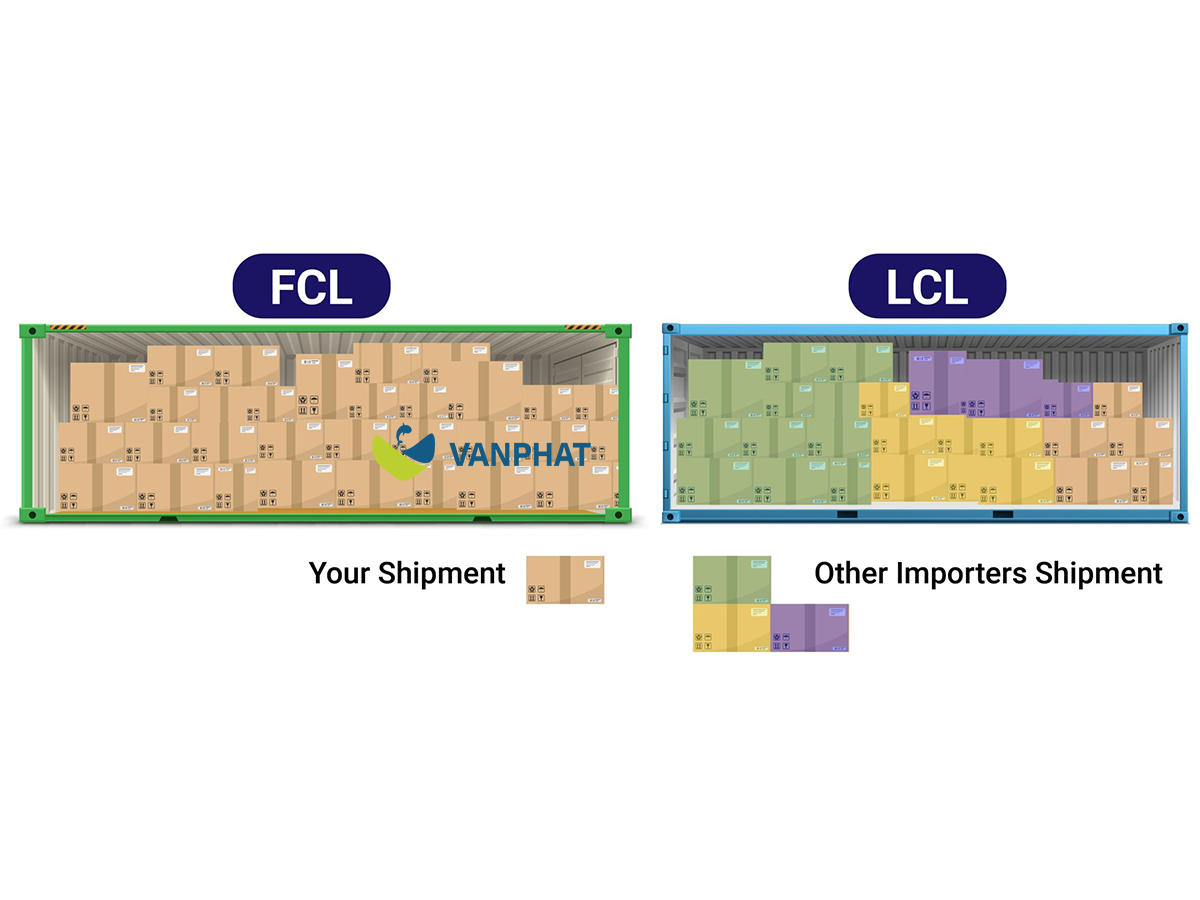
Unlike FCL shipments, LCL consignments expose SMEs to more handling stages, making document timing and cold-chain discipline critical.
For SMEs, LCL shipment has become a preferred entry strategy in 2025, particularly as freight volatility and inventory risk remain high across multiple trade lanes.
Why LCL works
- Lower initial capital exposure
- Ability to test demand for products like barramundi fish or tilapia fish
- Flexibility in mixed product trials
Where LCL requires discipline
LCL shipments also introduce additional handling points, which increases sensitivity to document timing and cold-chain coordination.
Cold-chain risk tends to rise during:
- Consolidation and deconsolidation
- Extended dwell time due to documentation delays
In several recent cases, SMEs experienced clearance delays not because of product issues, but because document corrections were requested after consolidation, extending dwell time and increasing storage and handling costs.
SMEs using LCL must plan:
- Temperature monitoring throughout transit
- Clear responsibility at transfer points
- Insurance coverage that reflects delay-related risk
When managed correctly, LCL allows frozen seafood importers to enter new markets, test products and scale gradually without overcommitting capital.

Labeling: A Silent Deal-Breaker
Operationally, labeling errors are one of the most common causes of import delays, yet they are also among the easiest to prevent
Typical issues include:
- Incorrect commercial name for tuna species
- Inconsistent net weight presentation
- Missing origin or storage statements
- Mismatch between label and invoice
Products such as yellow fin tuna, yellow tail tuna and tuna loin are particularly sensitive to naming standards across regions.
For SMEs, labeling should be finalized and verified before packing, not adjusted at port.
A Realistic SME Timeline to Import Seafood from Vietnam for SMEs
Planning stage (Days 1-10)
- Select target market and species
- Shortlist suppliers
- Request compliance documentation
Specification setup (Days 11-30)
- Finalize product specs and labels
- Decide on LCL or FCL
- Map documentation flow
Pilot shipment phase (Days 31-60)
- Ship pilot order
- Monitor cold chain and clearance
Review and scale preparation (Days 61-90)
- Review landed cost
- Correct gaps
- Prepare repeat shipment
This structured approach allows small seafood trading companies to scale sustainably.
How Experienced SMEs Handle Import Disruptions
Inspections, delays, and document queries are a normal part of international seafood trade. They are not indicators of failure.
What distinguishes successful SMEs is their ability to respond effectively. Specifically, this includes clear ownership of follow-up actions, fast and accurate document correction and the discipline to limit losses rather than compound risk.
Ultimately, this is where experience matters more than factory scale.
A Different Approach for SME Importers
SMEs do not need factory-standard sourcing. They need import-oriented sourcing.
An import-oriented approach is structured around:
- Destination-market rules
- Shipment design
- Documentation flow
- Risk containment
not around production capacity alone.
How VanPhat Imex Supports SME Buyers
VanPhat Imex works with SMEs by reframing how sourcing decisions are made. Rather than asking importers to adapt to factory-driven systems, VanPhat Imex starts from the realities of SME operations and designs the sourcing process accordingly. The focus is on ensuring that each shipment is built to clear borders smoothly and scale sustainably.
As part of this approach, this means prioritizing:
- Aligning product specifications with destination-market compliance requirements
- Structuring shipments around SME volumes and cash-flow constraints
- Supporting LCL trials as a controlled entry strategy
- Preparing documentation with import clearance and inspection readiness in mind
In particular, this approach is particularly relevant for SME buyers sourcing:
- Pangasius fillet (basa fillet) for European markets
- Vannamei shrimp for the Middle East
- Black tiger shrimp for premium and niche segments
- Tuna loin for foodservice and retail programs
Importantly, the objective is not to maximize volume in the shortest time. It is to establish repeatable, compliant import flows that SMEs can rely on over the long term.
Final Perspective
Overall, Vietnam remains a competitive sourcing origin for a broad range of seafood products. For SMEs looking to import seafood from Vietnam sustainably, long-term success depends far less on headline pricing and far more on how well their import systems are designed.
As a result, SMEs that understand the full import process and work with partners who share that understanding are better positioned to build resilient seafood businesses in an increasingly regulated global market.
Looking ahead, as trade controls tighten and compliance expectations continue to evolve in 2025 and beyond, this distinction will only become more important.


